1806
The time signal begins
The firing became part of Cape Town’s working relationship with ships, clocks and the harbour.
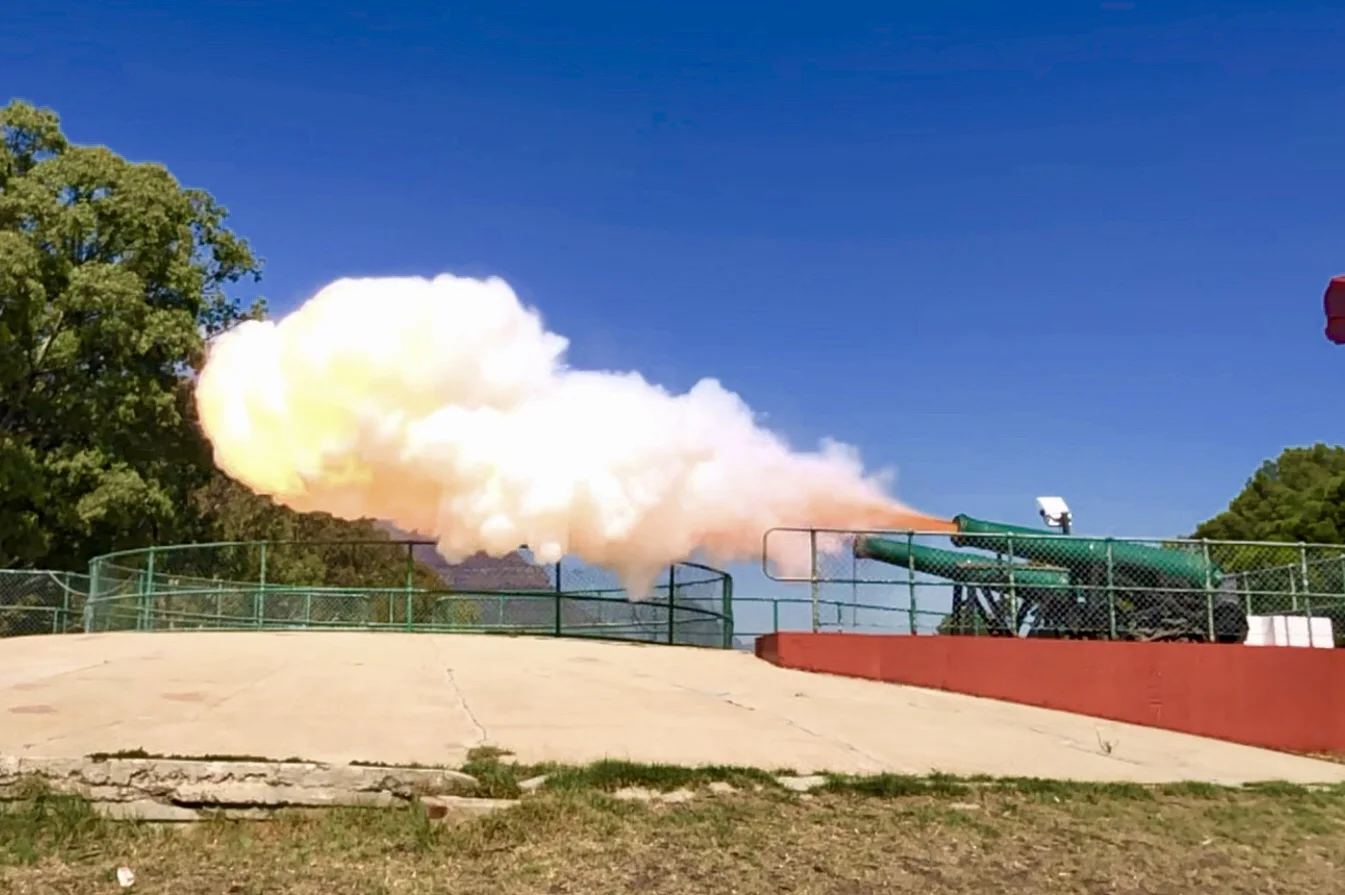
The sound of twelve
At noon, conversation pauses and first-time visitors look up. The report rolling across De Waterkant comes from the Noon Gun on Signal Hill—one of Cape Town’s oldest living rituals.
Why a gun?
Signal guns once carried practical news across the early Cape settlement, including the arrival of ships needing supplies. The Noon Gun tradition has also served as a time signal since 1806, when an accurate clock at sea mattered to navigation.
Mariners could check their chronometers against the firing. From a ship in Table Bay, the useful cue was the puff of smoke: light reached the eye before the slower report reached the ear. It is a small piece of maritime science still audible in the modern city.
Since 1864 the firing signal has been linked electrically to the master clock at the South African Astronomical Observatory. The ritual is maintained by the South African Navy.
1806
The firing became part of Cape Town’s working relationship with ships, clocks and the harbour.
1902
The first signal from Lion Battery was fired on 4 August 1902, above the growing city.
2 guns
The pair are 18-pounder smooth-bore muzzle-loaders; one fires while the other serves as backup.
Hear it from the village
The gun normally fires at 12:00 from Monday to Saturday, excluding public holidays and subject to operational changes. You do not need to stand at the battery: in De Waterkant the report arrives over Signal Hill, rebounds between close-set buildings and becomes part of the neighbourhood’s midday soundscape.
If you plan to visit Lion Battery itself, confirm current public access before setting out. Access arrangements can change.
Read the neighbourhood
Follow the cobbles, rooflines and old relationship with Table Bay through the story of De Waterkant.